What a renovation warranty in Dubai actually covers
Final payment and final inspection are not the same event. What the contractor owes you afterwards, what the manufacturer owes, and what the law owes.
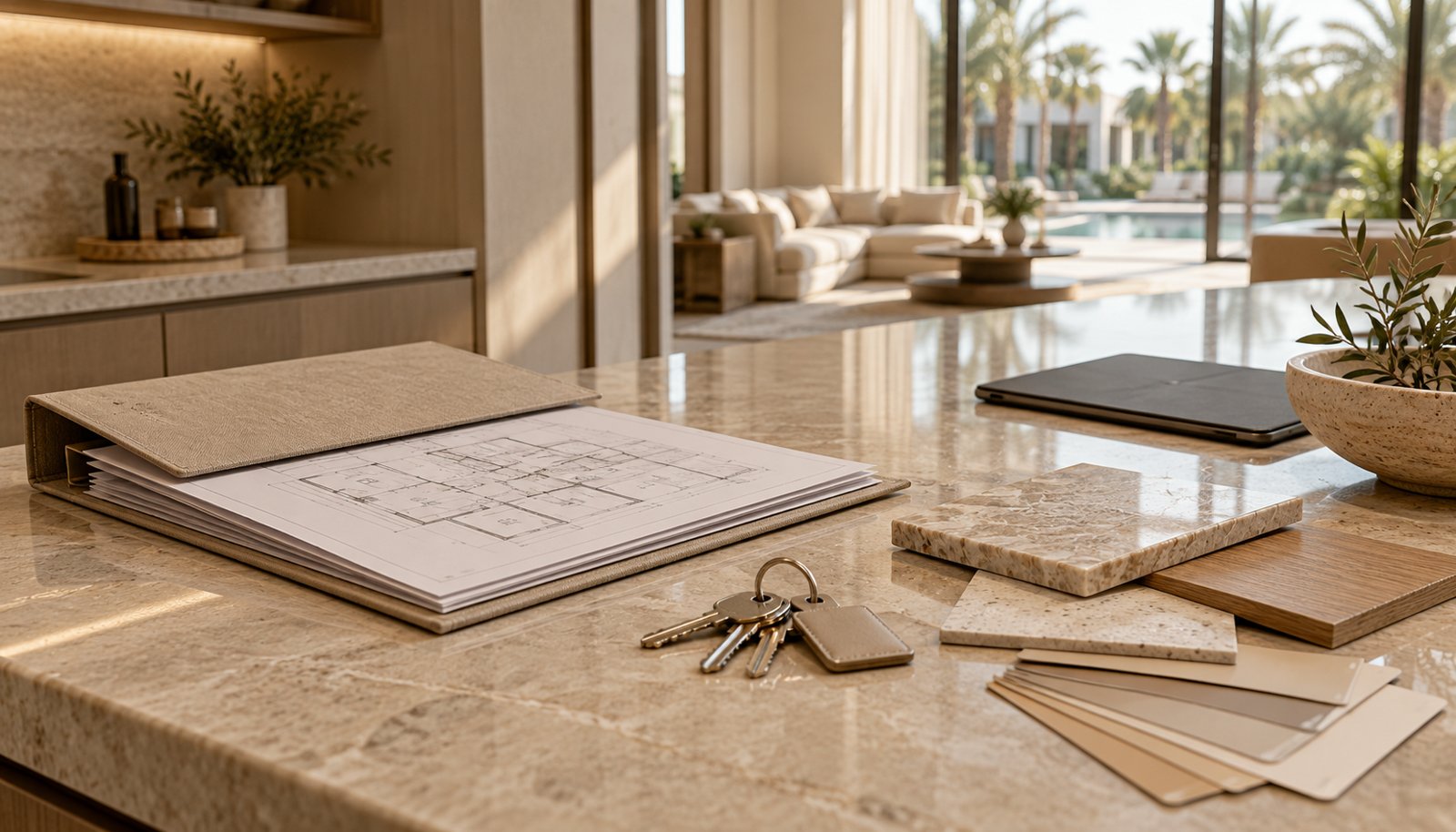
Final payment and final inspection are not the same event, and the gap between them is where most renovation disputes live.
A renovation does not end when the furniture arrives. It ends when the defects are closed, the paperwork is handed over and somebody can still be called if a tap drips in March. Owners rarely ask about any of that before signing, which is why it is worth knowing what exists.
Three different things get called a warranty
- The contractor’s defects liability. A period after completion during which the contractor returns and fixes faulty work at their cost. Twelve months is the common length in renovation contracts here, but it is a contract term, not a law — whatever is written is what you have.
- Manufacturer warranties. Air conditioning equipment, pumps, appliances, lighting drivers, automation hardware, sanitaryware. These belong to the product, run for their own periods, and usually depend on correct installation and servicing.
- Statutory liability for structural work. Under the UAE Civil Code, the main contractor and the supervising engineer are jointly liable for ten years from handover for total or partial collapse and for defects that threaten the stability and safety of a structure. It is strict liability, and under Article 882 it cannot be contracted out of. It does not cover a cracked tile or a sticking door — it covers the structure itself.
So a tile is a defects-liability question, an air conditioning compressor is a manufacturer question, and a structural failure is a legal question. Most arguments come from treating all three as one promise.
Ask what the defects liability period is, when it starts, and what is excluded, before the contract is signed. Starting from completion rather than from handover of the paperwork is a small difference that matters when completion drags.
What handover should actually include
Keys and a handshake is not a handover. The pack worth insisting on:
- Approvals and completion certificates for the works, and the community or building sign-off where one applies.
- As-built drawings showing where services actually run, not where they were first drawn.
- Equipment manuals, warranty cards and serial numbers for everything installed.
- Finish references — paint colours and codes, tile and stone names with batch, grout and silicone shades, timber and laminate references. In three years this is what makes a repair invisible.
- Test records for waterproofing, pressure testing and electrical work.
- Access details — keys, remotes, gate codes, Wi-Fi and automation logins, and who holds the programming file.
- A maintenance note saying what needs servicing and how often.
Snagging your own renovation
The same discipline as snagging a developer handover, applied to your own contractor. The method is in the snagging checklist to run before a Dubai property handover; what changes is the list.
- Do it in daylight, room by room, with the lights also switched on.
- Run the services. Every tap and drain, the shower for several minutes, the extract fans, every socket and switch, and the air conditioning long enough to see whether each room actually cools.
- Open and close everything. Doors, windows, drawers, wardrobes, cupboard hinges, the pool gate.
- Look along surfaces, not at them. Ceilings and walls show waves and joints only when you look across them at a low angle.
- Check the quiet details — silicone lines, grout, skirting junctions, how edges meet in corners, whether the floor is level at thresholds.
- Write it down with photographs, one line per item, one location per line. A list of twenty specific items gets fixed; “the bathrooms are sloppy” does not.
Then agree a date for each item and a date for re-inspection. Verbal promises at this stage have a short life.
Money is the mechanism
The only reliable incentive to close a snag list is an unpaid balance. Holding a final portion of the contract sum until the defects are signed off is normal practice and worth agreeing at the start rather than improvising at the end. What belongs inside the quoted figure in the first place is in what turnkey actually includes in a Dubai renovation.
What is not a defect
Being fair about this keeps the relationship useful for the year that follows.
- Variation in natural materials. Stone and timber vary by batch and piece; that is the material, not the workmanship.
- Normal movement. Fine hairline cracking at junctions in the first months is common; recurring or widening cracks are not.
- Wear from use, and anything damaged after handover by someone else.
- Design decisions you approved. A socket in an awkward place that appeared on the drawing you signed is a lesson, not a claim — which is the argument for settling the big decisions early.
What quietly voids your cover
- Letting another contractor work on the same elements. Once someone else has opened it, responsibility blurs.
- Skipping servicing, especially on air conditioning, where manufacturer cover usually depends on it — see why your air conditioning might be costing you more than it should.
- Harsh cleaning products on stone, timber and brassware.
- Losing the paperwork. A warranty you cannot evidence is a conversation, not a claim.
After the first year
Most of what fails later is maintenance rather than workmanship: silicone in wet areas, grout, external paint, AC filters and coils, pool chemistry, irrigation, door hardware. A short annual list — and somebody actually doing it — preserves the work for far longer than any warranty period covers.
What to ask before signing
- How long is the defects liability period, from what date, and what is excluded?
- What portion of the payment is held until defects are closed?
- What exactly is in the handover pack?
- Who is the contact during the defects period, and what is the response time?
- Which items carry manufacturer warranties, and are they registered in my name?
- What servicing is required to keep each of those valid?
A renovation is finished twice: once when it looks done, and once when it is proven done. The second one is the one worth paying attention to.