Commercial fit-out in Dubai: approvals, cost drivers and timeline
Offices, showrooms, boutiques and restaurants. Same trades as a home renovation, a different order of events — here the landlord, the authority and Civil Defence come before the design.
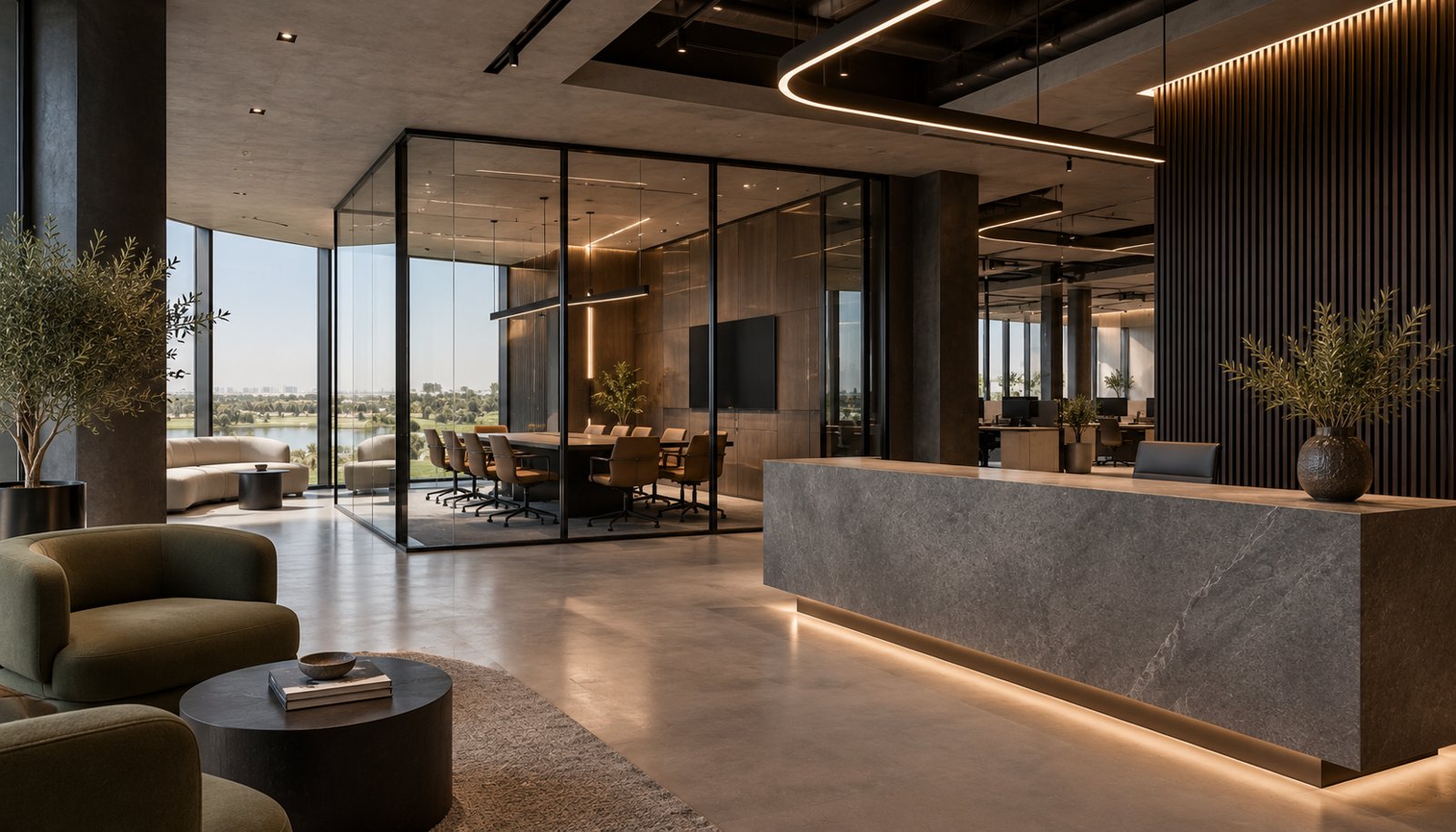
In a home, the renovation starts when the design is ready. In a commercial unit, it starts when the paperwork is ready — and the lease is usually already running.
A commercial fit-out in Dubai is the work that turns an empty leased unit into a working office, showroom, boutique or restaurant. Same trades as a home renovation, completely different order of events: here the approvals, the landlord and the fire authority sit in front of the programme, and rent is being paid while they do.
What commercial fit-out actually means
Three terms get used in Dubai leases, and they are not the same thing.
- Shell and core. Structure, facade, lifts and the building’s main services only. Inside the unit there are bare walls, a concrete floor and capped connections. Everything else is the tenant’s job.
- Category A. A basic finished space: raised floor or screed, ceiling, basic lighting, air conditioning distribution, fire detection. Usable, generic, with no identity.
- Category B. The fit-out most tenants mean: layout, partitions, joinery, feature finishes, lighting design, branding, meeting rooms, kitchens, AV and IT, furniture.
Knowing which of the three the unit is being handed over at is the single most useful thing to establish before signing anything, because it decides the size of the project.
Approvals decide the programme, not the design
Commercial work has more gates than residential, and they run in a specific order.
- The landlord or building management NOC comes first. Mall units, towers and business parks all have their own fit-out rules, working hours and contractor requirements, and nothing is submitted anywhere before this is in hand.
- The authority depends on where the unit sits. Mainland addresses go to Dubai Municipality; the TECOM clusters go to Dubai Development Authority; the Nakheel and port areas go through Trakhees; JLT, DIFC, Dubai South and the other free zones each have their own authority. One of these is your route — and it is set by the address, not by preference.
- Dubai Civil Defence applies to commercial premises. Fire detection, suppression, emergency lighting and alarm monitoring are reviewed separately from the main permit, and that submission runs in parallel rather than afterwards.
- DEWA comes in whenever the electrical load changes or new connections are needed.
- Completion is also a document. The authority’s completion certificate and the Civil Defence completion certificate are both needed, and the trade licence depends on them. A unit that is physically finished but not certified cannot legally open.
In practice this means weeks of approvals before anybody is on site. The residential version of the same logic is in how renovation permits and NOCs actually work in Dubai.
Check the fit-out period in the lease before signing it. Many landlords give a rent-free window for the works. If approvals eat that window, the tenant pays rent on an empty unit — which is the most expensive mistake in commercial fit-out, and it happens before a single wall is built.
What drives the cost
Finishes are the visible part and rarely the biggest line. What moves a commercial budget:
- Mechanical, electrical and plumbing. Air conditioning rework, power distribution, drainage brought to where it is needed.
- Fire and life safety. Detection, suppression, emergency lighting, signage, and the monitoring the authority requires.
- Partitions and glazing. Glass offices and acoustic separation cost more than plasterboard, and acoustics are what make a meeting room usable.
- Ceilings and lighting. A commercial ceiling carries the services, the sprinklers and the lighting design, which is why it is coordinated rather than simply installed.
- Joinery and shopfront. In retail, the shopfront is both the brand and the most heavily regulated element in the unit.
- Working hours. Malls and occupied towers often allow night work only, which stretches programmes and adds cost.
- Reinstatement. Many leases require the unit to be returned to its original state at the end. That obligation is priced at the beginning, not discovered at the exit.
Office, retail and food: three different projects
- Office. Density, meeting rooms, acoustics, cabling and air conditioning balance. The brief is how people work, not how the reception looks.
- Retail and showrooms. The shopfront, the route a customer walks, lighting that makes products look right, and mall design rules that constrain all three.
- Food and beverage. The most demanding: kitchen extract and grease handling, drainage and grease traps, gas where used, and a food establishment permit after the build. This is the one where the mechanical design, not the interior, decides the project.
Where commercial fit-outs go wrong
- Signing the lease before checking the fit-out conditions, the handover category and the rent-free window.
- Starting work before the permit. A stop order costs far more than the wait.
- Treating Civil Defence as a formality rather than a parallel design input.
- Ordering furniture to the original date and storing it while approvals run.
- Appointing a contractor without the right registrations for that building and that authority.
- Forgetting reinstatement, then paying for it at the end of the lease.
How the timeline really runs
Approvals first and in parallel with each other, then mobilisation once the main permit is issued, then first fix of services, then ceilings and partitions, then finishes, joinery and furniture, then testing, inspections and the completion certificates, and only then the opening date. Working backwards from a launch date without the approval weeks built in is how openings get postponed.
What belongs inside a single quoted figure is set out in what turnkey actually includes in a Dubai renovation, and the order in which decisions become permanent in the ten choices that decide how a Dubai renovation turns out.
What to ask before signing
- What condition is the unit handed over in — shell and core, Cat A, or fitted?
- Which authority governs this address, and has this contractor worked with it before?
- How long is the rent-free fit-out period, and when does it start?
- Who prepares and submits the Civil Defence package?
- What are the building’s working hours and contractor rules?
- What does the lease require at reinstatement?
A commercial fit-out is judged on an opening date. Everything that decides whether that date holds is settled before the site is handed over.