10 costly mistakes that blow up a renovation budget
Every one of these has a price attached. Most are avoidable in the first three weeks.
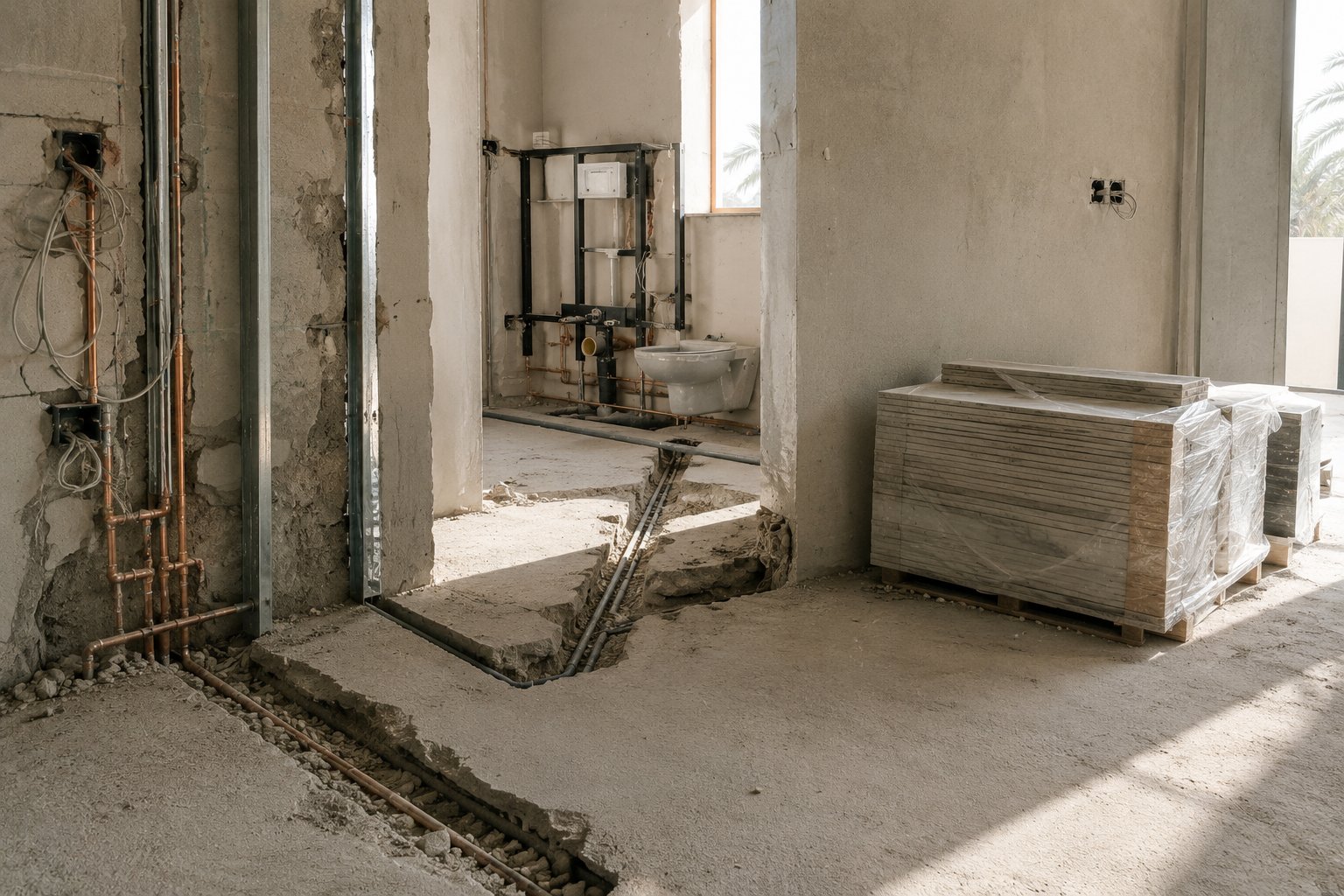
A renovation rarely goes over budget in one dramatic moment. It goes over in ten small decisions, most of them made before anyone picks up a tool.
Below are the ten we see most often across villas and penthouses in Dubai. None of them are exotic. Each has cost a real client real money, and each was avoidable.
Before you sign
Signing a quote with no defined scope of works
"Full villa renovation" is not a scope. A real one names rooms, finishes, brands, quantities and exclusions. Anything left undefined becomes a variation order later — priced at a moment when you have no leverage and no competing bid.
Comparing quotes on the bottom line
Three quotes with three different totals are usually three different scopes. The cheapest is often simply the one that excluded the most. Ask every contractor to price the same schedule, or you are not comparing anything at all.
A variation ordered after work has started typically carries a 15–30% premium over the same item priced at tender stage.
Skipping a measured site survey
As-built almost never matches the developer's drawings. Slab levels shift, risers move, column sizes differ. Discovering that after joinery has been manufactured means manufacturing it again.
During the build
Ordering long-lead items after demolition starts
Stone, joinery carcasses and specialist glazing run eight to twelve weeks. Order late and every trade behind them waits on a single delivery — while the labour already on site is still being paid for.
Moving a bathroom or kitchen after first fix
Relocating a drain once the screed is down means breaking waterproofing, re-testing, re-screeding and re-tiling. A decision that takes two minutes to make takes three weeks to undo.
Buying the cheapest MEP package
Mechanical, electrical and plumbing is the one thing you cannot see and cannot cheaply fix. Failures surface in year two, behind finished walls. The saving at tender is rarely more than a few per cent of the total.
Choosing materials from a screen
Dubai light is harsh and directional. A stone that reads warm grey in a European showroom photograph can read distinctly pink on site. Approve physical samples in the actual room, at the hour of day you will use it.
Before handover
Paying against dates instead of completed work
Payment tied to the calendar removes any incentive to keep pace. Tie each release to a verified milestone instead — first fix complete, joinery installed, snag list closed.
Leaving authority approvals until late
Depending on the community, approvals run through DDA, Trakhees or the municipality, and each carries its own timeline. Applying after work begins is how a finished home sits empty, waiting on a certificate.
Cutting the snagging period to move in sooner
The final five per cent is where a renovation is judged. Contractors are considerably more responsive before final payment than after it. Moving in early costs you the leverage to have things put right properly.
None of this requires a bigger budget. It requires decisions made in the right order, early enough that they are still cheap to make.
Most of these mistakes come from an unclear scope. What belongs inside a single quoted figure is set out in what turnkey actually includes in a Dubai renovation, the budget itself in what a villa renovation actually costs in Dubai, and the approvals that have to run in parallel in how renovation permits and NOCs actually work in Dubai.