Villa renovation on Palm Jumeirah: Nakheel, Trakhees and the sea
Two approvals instead of one, a facade that cannot change, and salt air on both sides of every frond. What a villa renovation on Palm Jumeirah really involves.
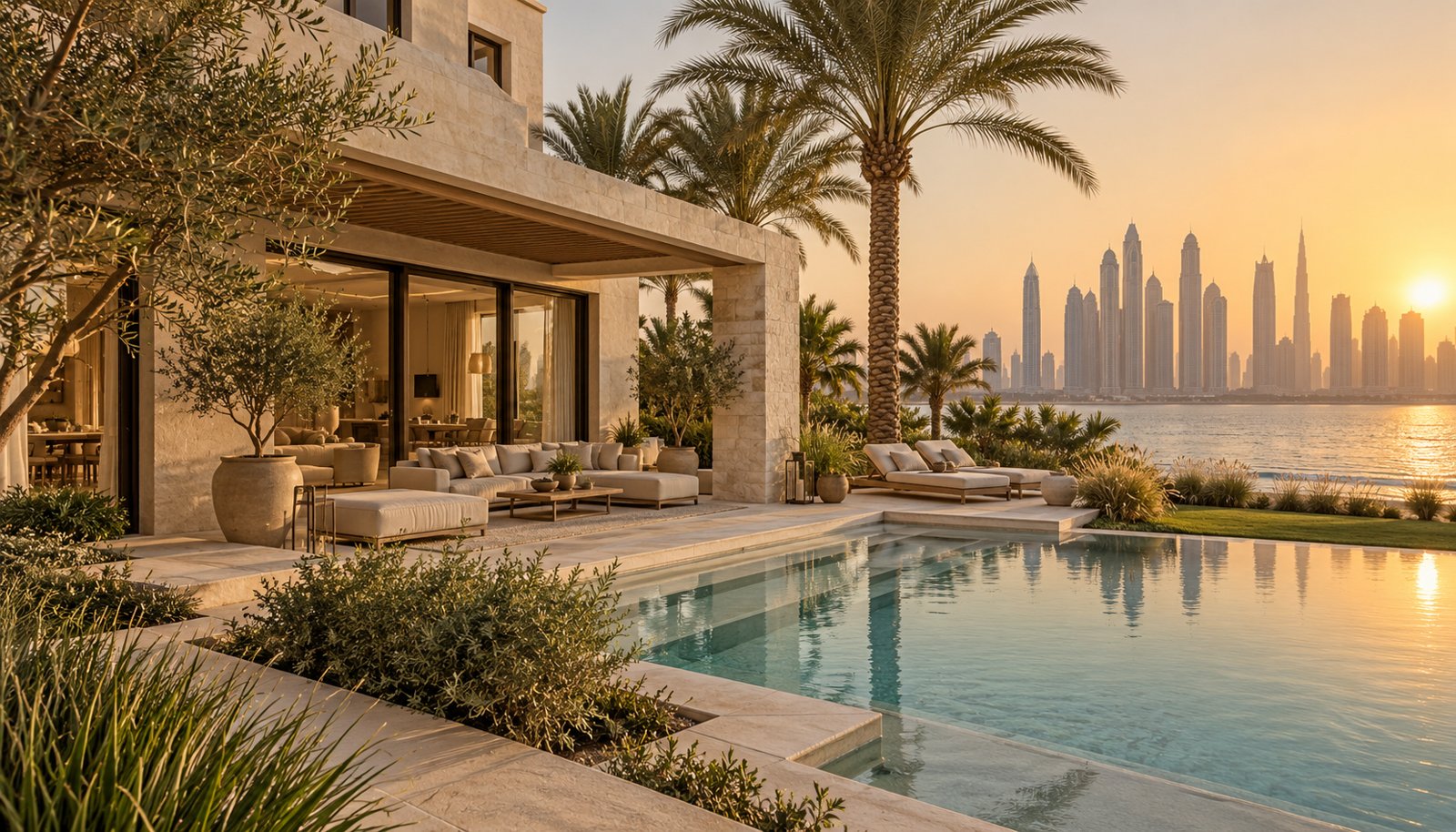
On the Palm, the design is the easy part. What takes the time is proving to two separate bodies that the design is allowed.
A villa renovation on Palm Jumeirah runs differently from one anywhere else in Dubai. The island was built by Nakheel, which means the approval route is not the Emaar one most owners have heard about, and the sea sits on both sides of every frond, which changes what the house is built from and how long those materials last.
Roughly 1,700 villas sit along the fronds, with around twenty Shoreline buildings and some 2,500 apartments along the trunk, and the hotels and towers of the Crescent beyond. Most of it has now been lived in long enough for the first serious renovations to be due.
What makes a Palm Jumeirah renovation different
- Two approvals, not one. Nakheel first, then the permit from Trakhees. Each has its own format and its own queue.
- The outside of the house is not yours to redesign. The island has a controlled appearance, and that is enforced.
- Salt and humidity are constant. Everything metal, everything outdoors and every opening is affected.
- Access is narrow. One road down each frond, neighbours either side, and deliveries that have to be planned rather than improvised.
What needs a Nakheel NOC on Palm Jumeirah
The general rule is that anything affecting appearance, structure, building services or the neighbours needs approval before it starts. In practice that covers:
- Changes to the facade, windows, doors, balconies and balustrades
- Extensions, boundary wall changes, gates and car canopies
- Pergolas, outdoor kitchens, hard paving and new pools
- Any structural work, and any change to the mechanical, electrical or plumbing systems
- In apartments, effectively any modification at all
Interior work that touches none of the above is the lightest case, but even then the contractor needs site access, which is itself issued rather than assumed.
On the Palm the sequence matters more than the paperwork itself. The NOC comes first, the permit is obtained on the strength of it, and site access is issued after that. A contractor who starts the file in the wrong order loses weeks that no amount of site effort recovers.
How the approval route runs: Nakheel, then Trakhees
The route has a fixed shape. The application goes to Nakheel with a description of the works, existing and proposed drawings, the services solution, and the owner's and contractor's details. Nakheel reviews it and issues a modification NOC, with comments or with elements refused. The contractor then obtains the Trakhees permit on the basis of that NOC, and only then applies for site access and mobilisation. At the end there is an inspection and a completion certificate.
How this compares with the Emaar communities and with mainland villas is set out in how renovation permits and NOCs actually work in Dubai.
What cannot be changed on a Palm villa
- The silhouette. Adding a full floor or extending beyond the established footprint is not a design question; it is normally refused.
- The facade colour and materials on the street and sea-facing sides, unless they form part of an approved scheme.
- The beach itself. Structures, platforms and anything that pushes onto the shoreline.
- Equipment on show. Condensers, generators, heat pumps and solar panels belong in permitted positions, out of sight and within noise limits.
- In apartments: enclosing or glazing balconies, cutting structural walls and slabs, opening shafts, and moving wet areas without a services design and permit.
Which is why a Palm renovation is almost entirely an interior and garden project, with the building envelope left as it was designed.
Apartments on the trunk and the Crescent
Shoreline apartments and the towers behave like any Dubai high-rise, with the Nakheel layer on top: building management controls working hours, the service lift, waste routes, protection of common areas and the deposit, and the approvals still run through Nakheel and Trakhees.
What the building itself decides, and why two identical flats are quoted differently, are covered in what the building decides in your Dubai apartment renovation and why two identical Dubai apartments cost different amounts to renovate.
What the sea does to a renovation
This is the part that separates a Palm Jumeirah renovation from the same job inland. Salt-laden air and constant humidity attack hardware, fixings and finishes, and they do it continuously rather than seasonally.
- Hardware and fixings specified for marine conditions, not simply for looks — hinges, handles, tracks, screws, outdoor lighting.
- Openings and seals. Windows and sliding doors take the brunt of it; failed seals show up as draughts, noise and running costs.
- Outdoor finishes. Stone, timber and metal all behave differently a few metres from the water.
- Air conditioning. Coils and external units corrode faster here, which is an argument for dealing with the system during the renovation rather than after it — see why your air conditioning might be costing you more than it should.
What drives the cost of a Palm Jumeirah renovation
- The approval route. Two bodies, drawings in the formats each expects, and a contractor who has passed through both before.
- Access. Deliveries down a single frond road, limited storage, and neighbours on both sides.
- Specification. Marine-grade hardware and higher-performing glazing cost more than the inland equivalent and last considerably longer.
- Scope outside the house. Pool, terrace, landscaping and lighting, each with its own approval.
- The house itself. Size, condition and how much of the services installation is being renewed.
How a villa budget divides between rooms and trades is in what a villa renovation actually costs in Dubai, and what belongs inside a single quoted figure in what turnkey actually includes in a Dubai renovation.
How long does a Palm Jumeirah villa renovation take
Longer than the same scope inland, and almost all of the difference sits at the front. Approvals run in sequence rather than in parallel, and the clock on site starts only once access has been granted. The work itself follows the same order as any full renovation, set out week by week in how a villa renovation in Dubai actually runs, week by week.
Before the first quote
- Separate what needs approval from what does not, and start the file early.
- Ask the contractor what they have completed on the Palm, and whether they have passed Nakheel and Trakhees before.
- Decide the outdoor scope now — pool, terrace and landscaping all carry their own approvals.
- Specify for the sea, not for the showroom.
- Agree access and working hours with the community before the programme is promised.
The order in which these decisions arrive, and which of them become permanent first, is in the ten choices that decide how a Dubai renovation turns out.